



I’m going to walk this one all the way through, because the last four weeks at Nvidia have been unhinged even by Silicon Valley standards.
On Monday, November 23, 2026, Nvidia’s board unanimously reinstated Jensen Huang as president, CEO, and a board director — about 12 days after it announced he had resigned, and six days after it told investors it did not plan to bring him back. In between those two points sat an admission of infidelity, a reported relationship with a woman U.S. officials believe is a Chinese spy, a second alleged affair with an Nvidia vice president who reports to him, a third alleged affair with an unnamed employee, a plunging stock, and a public assist from the president of the United States.
I’m going to keep the lanes clean. What Huang admitted, I’ll tell you as fact. What the New York Times and Reuters reported — and what the U.S. government has and has not officially concluded — I’ll label that way. No extra spice. The record is already wild enough.
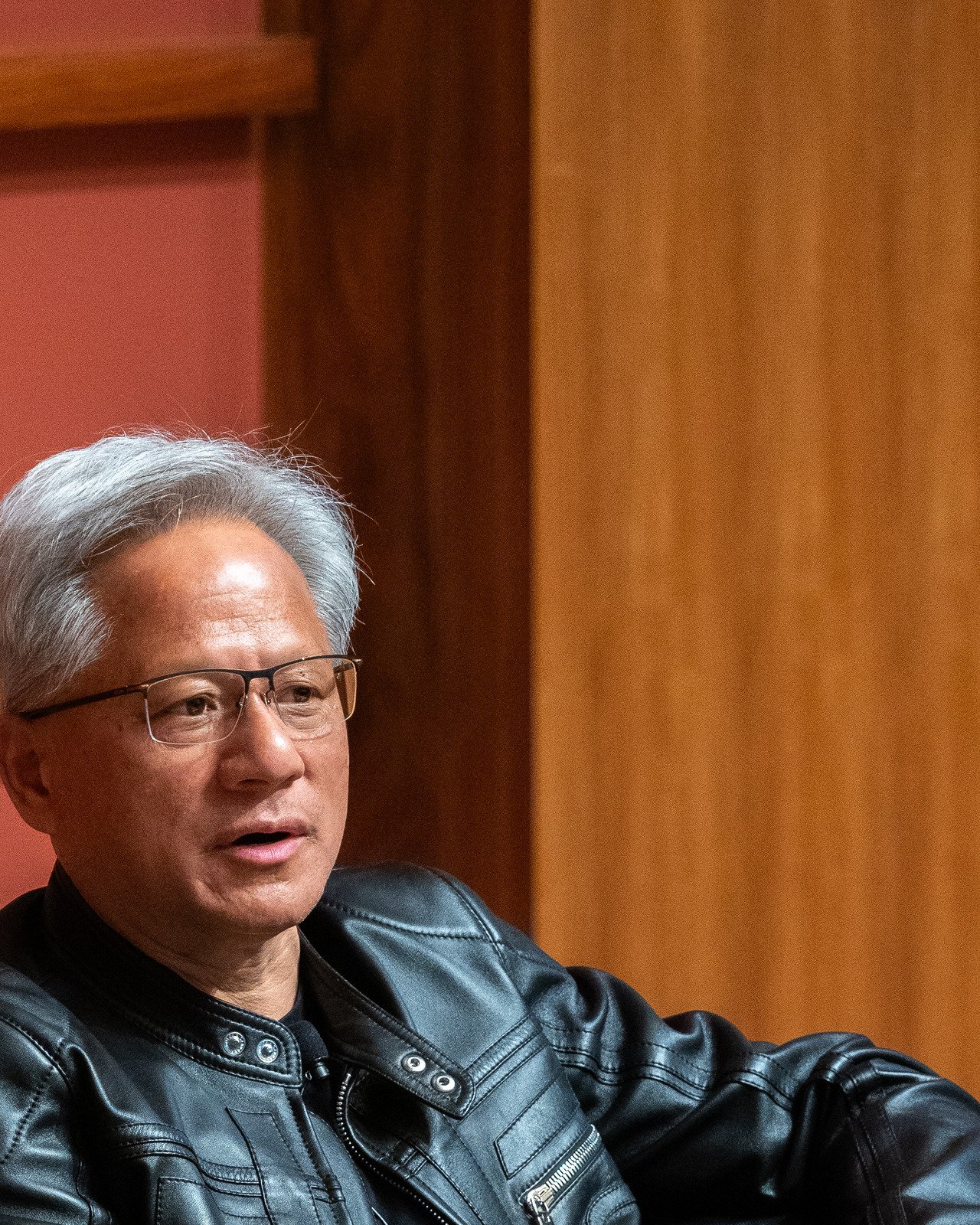
Who are the women?
Let’s start here, because that’s the question everybody is asking, and because the reporting can get sloppy if you let it.
Alice Huang, also known as Huang Le
Alice Huang is a Chinese citizen and a former executive at Megaspeed, a Singapore-based AI infrastructure and data-center company that became an official Nvidia cloud partner. She is of no relation to Jensen Huang. BBC reported she was a top executive at Megaspeed between March and November 2023. Reuters, citing corporate records reviewed by the research group C4ADS, reported she became Megaspeed’s controlling shareholder in March 2023.
The New York Times reported in late October 2026 that Huang had a “close relationship” with her, and that U.S. officials believe she is a Chinese spy who passed information to Beijing. The Times later reported she was in contact with an officer at China’s Ministry of State Security during at least part of the time she was engaging in a relationship with Huang, CNBC said in its Monday recap. China has rejected the spy allegation. On November 10, Foreign Ministry spokesperson Guo Jiakun called it “purely unsubstantiated and directed at smearing China.” U.S. Attorney General Todd Blanche said on November 12 that the Justice Department has not reached a conclusion on whether she was a Chinese spy, Reuters reported. Blanche added that “of course” the FBI was investigating the reports.
Huang admitted on November 8 that he had been unfaithful to his wife. He did not name Alice Huang in that letter, but he tied the admission to “the national security concerns raised in news reports.” Those reports were about her. Photos and video have shown the two of them together at industry events, including in Taipei in 2024 and 2025, according to Reuters, the Guardian, and the BBC. We do not have a legally usable official or Commons-licensed photograph of Alice Huang to publish here, and we’re not going to invent one.
Kimberly Powell

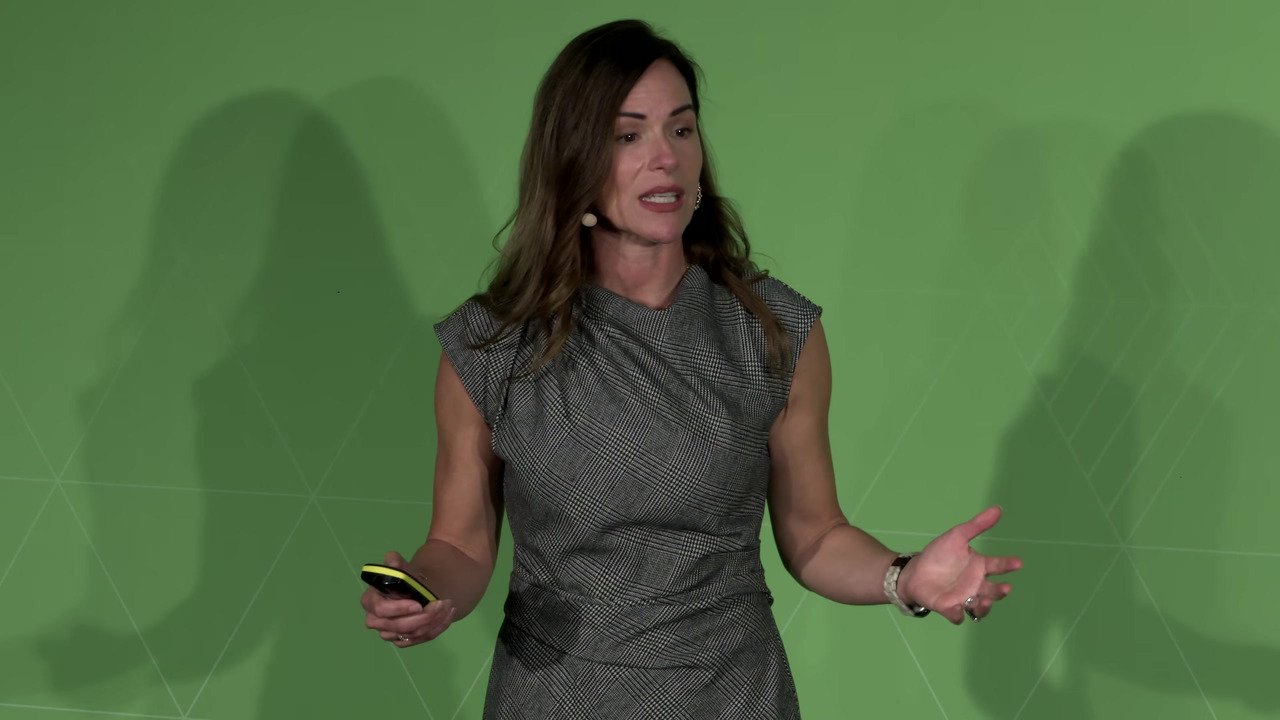
Kimberly Powell is Nvidia’s vice president of healthcare — in some company materials, vice president of healthcare and life sciences — and, according to the New York Times, she reports directly to the CEO. She joined Nvidia in 2008 and, in the company’s own description, leads its worldwide healthcare business, including platforms for medical imaging, life sciences, and drug discovery.
On November 11, the Times reported that Huang also had an extramarital relationship with Powell, citing five people who worked at Nvidia, TechCrunch said. The Times reported they were captured on film “being affectionate” at a hotel during a conference earlier this year. Nvidia, Huang, and Powell have not confirmed that report. Reached by a Times reporter, Huang said, “I don’t think you should be talking to me directly,” before hanging up, TechCrunch reported. Powell did not respond to a request for comment from the BBC.
A third, unnamed Nvidia employee
On the afternoon of November 12, after Huang’s resignation had already been announced, Reuters reported that Huang had another extramarital affair with a different Nvidia employee. Reuters withheld her name. We are not going to try to fill that in. Nvidia declined to comment to Reuters, and the woman was not identified.
Huang has been married to Lori Huang, née Mills, since 1985. They met as lab partners at Oregon State University and have two children, Madison and Spencer, the BBC reported. In his November 8 letter, Huang apologized to his wife and children and asked that his family be given privacy. That request still stands here.
The full timeline
2023–2025: Megaspeed, the chips, and the first sightings
Megaspeed sits at the center of the national-security half of this story. The Guardian, drawing on corporate reporting, said the firm was spun out in March 2023 from a Chinese video-game company, 7Road Holdings, and was at that time controlled by Huang Le Ltd, an entity affiliated with Alice Huang. In November 2023, those shares were sold to a Singaporean shell company called Swiftdata, and Megaspeed was soon designated an Nvidia cloud partner — a status that meant preferential access to Nvidia’s advanced AI chips.
In June 2024, Jensen Huang and Alice Huang were seen together at a bar in Taipei, the Guardian reported; the Wall Street Journal said the person who introduced them was Alice Huang’s husband, Kang Wei. They were seen together again at an industry conference in Taiwan in May 2025. The Times also reported that Alice Huang visited Nvidia’s headquarters in Santa Clara two months before that May appearance.
U.S. and Singaporean authorities had already been looking at Megaspeed. The Guardian, citing the Times, said the U.S. Commerce Department began investigating in September 2024 whether the firm was diverting Nvidia chips to Chinese companies, which could violate export restrictions. TechCrunch dates public confirmation of U.S. and Singapore investigations to October 2025. At the time, an Nvidia spokesperson said the company did not have “any reason to believe products had been diverted,” and that visits to Megaspeed sites had found “a small commercial cloud… as allowed by U.S. export control rules.”
The Times later reported that President Trump was briefed in late 2025 on U.S. surveillance of Alice Huang and her relationship to Jensen Huang, and that he did not act on it. The Guardian noted Trump has since said he did not remember being briefed. In December 2025, Trump approved the sale of more advanced Nvidia chips — including the H200 — to China, with a portion of the sales going to the U.S. government.
Spring 2026: A secret memo
In May 2026, according to the Times as relayed by the Guardian and TechCrunch, Secretary of State Marco Rubio oversaw a memo, based on electronic surveillance of Alice Huang, warning that Jensen Huang had become close to an alleged Chinese spy. Trump still invited Huang on a trip to China, calling him “the Great Jensen Huang.”
October 29, 2026: The Times story lands
The New York Times published the first major public account of the “close relationship.” Nvidia spokesperson John Rizzo said Jensen’s interactions with Alice Huang were “not unusual or unexpected.” “Meetings with customers are part of a CEO’s job; Jensen talks with thousands of customer executives every year,” Rizzo said, adding that “if the U.S. government believes that any person is a threat to American industry, it would let us know.”
November 5: Congress wants a briefing
Three Republican committee chairmen — Rep. John Moolenaar of the House Select Committee on China, Rep. Brian Mast of House Foreign Affairs, and Rep. Rick Crawford of the House Intelligence Committee — asked Huang for a closed-door joint briefing. “Recent reports raise significant national security concerns regarding the [People’s Republic of China]’s access to sensitive U.S. technology and information,” they wrote.
November 8: Huang admits he was unfaithful
In a letter to employees, dated November 8 and published in full by CNBC, Huang wrote:
“I owe my family and all of you an apology. I was unfaithful to my wife. My actions hurt her and our children. There is no excuse for what I did. I am deeply sorry.”
He said he took full responsibility, apologized to his wife and family, and told colleagues that “you deserve better from me.” “Leading NVIDIA is the privilege of my life,” he wrote. “I have fallen short of that responsibility. I am fully committed to NVIDIA and will work to earn back your confidence.” On the national-security reporting, he said the board had started an independent investigation, and that he would cooperate fully. “My family bears no responsibility for my choices. I do. Please give them privacy.”
The board, in its own statement that day, said it was initiating an independent investigation “in light of recent reporting that founder and CEO Jensen Huang has been the target of a foreign intelligence effort.” A committee of independent directors, with outside counsel, would oversee it. “While the Board has no reason to believe that either national security or NVIDIA secrets were compromised, the Board’s inquiry will examine all available information.” The board said it had “confidence in Jensen and his leadership team.” The company also told CNBC: “Today’s news will not slow NVIDIA. Jensen is committed to continuing to lead NVIDIA as CEO without interruption.”
That confidence lasted three days. Nvidia shares slid more than 5% the following day, TechCrunch reported. President Trump, asked about Huang that Sunday night, called him “a fine person” and, asked if Huang should remain CEO, said, “I think so. Oh yeah, sure.”
November 9–10: The story gets louder
Huang pulled out of upcoming speaking engagements. Trump, at a press conference on November 9, said the FBI was investigating and that he had asked Huang if he knew “the person in question was a spy.” “He said, ‘I had no idea that she was a spy.’ I really believe him,” Trump said, according to the Guardian. On November 10, China issued its denial, and a California shareholder, Mark Kistenmacher, filed a lawsuit accusing Nvidia of misleading investors, the Guardian reported. Reuters later reported that Singapore’s Home Affairs Ministry said Alice Huang had left Singapore in February and was barred from re-entering after an investigation into possible offenses, and that the investigation did not concern espionage.
November 11: The Powell report, and the board moves
This is the day the floor dropped out. The New York Times reported the alleged relationship with Powell. The Wall Street Journal reported that the Nvidia board was preparing to oust Huang. TechCrunch said the stock fell about 8% in after-hours trading that Wednesday. House China Committee Chairman John Moolenaar said that if Huang didn’t agree to the congressional briefing, he would likely be subpoenaed.
According to Nvidia’s Form 8-K, the board accepted Huang’s resignation as president, CEO, and a member of the board on November 11, effective immediately, and appointed Colette Kress, the company’s CFO since 2013, as interim CEO while a search began for a permanent successor. Nvidia issued the public announcement the next day, November 12, and named Harvey C. Jones — a board member since 1993 and a former Synopsys CEO — as the company’s first-ever chair of the board. Some later reports loosely dated the resignation to November 13. The official record is November 11–12.
November 12: A third alleged affair, and Washington piles on
The same day Nvidia announced the resignation, Reuters reported the third alleged affair with an unnamed employee. House Democrats, led by Rep. Richard Neal and Sen. Ron Wyden, said they would investigate how the Trump administration handled Nvidia’s chip sales to China. Sen. Tim Scott asked Huang and Commerce Secretary Howard Lutnick to testify before the Senate Banking Committee. Attorney General Todd Blanche said the Justice Department had not concluded that Alice Huang was a Chinese spy. Huang confirmed he would appear before Congress before Thanksgiving, TechCrunch reported; that closed-door House briefing was later described as expected on December 1.
November 17: Strong earnings. And a “no” that did not stick.
Nvidia reported fiscal third-quarter revenue of $115.8 billion, up 103% year over year, beating Wall Street expectations. Kress told analysts it was “business as usual” with customers, suppliers, and partners “100% behind us.” Chair Harvey Jones said the company was not considering reinstating Huang, and the company said it had hired an executive search firm. Kress also said Nvidia would no longer sell H200 chips in China.
Later that day, Huang posted his first public statement since the admission.
“Since my departure, I’ve seen an outpouring of calls from NVIDIA’s employees, investors, business partners, and customers for me to return as CEO,” he wrote. “If the Board of Directors decides that my return is in the best interest of our shareholders, our employees, the company, and America, I would be honored to answer these calls and return as CEO.” Elon Musk, Anduril founder Palmer Luckey, and Y Combinator’s Garry Tan were among the industry figures publicly calling for him to come back, TechCrunch reported.
November 23: He’s back
This morning, the board voted unanimously to reinstate him, effective immediately. It said it was satisfied with his “candor and ability to lead,” and that input from “senior levels of the United States government” left it confident the reinstatement “poses no national security risk.” The independent investigation will continue. A new National Security and Export Control Committee of independent directors has been formed. Nvidia is searching for a Chief Compliance Officer. Jones stays as chair. Kress stays as CFO.
Trump told CNBC he had been speaking to the board “directly and indirectly,” that Huang “did nothing wrong,” and that the board asked for — and received — assurances on the national-security question. On Truth Social, he called it “the correct and proper decision.” CNBC reported Nvidia shares surged 35% on the news, after falling nearly 33% from the November 8 admission. Reuters put the early-trading jump at nearly 30%.
Huang is still expected to sit for that December 1 House briefing, and a public Senate Banking Committee appearance is still on the calendar, with no date set. The investigation is not over. The spy allegation against Alice Huang has not been concluded by the Justice Department. The Powell report and the Reuters report have not been confirmed by Huang, Powell, or Nvidia. He has his job back anyway.
We’ll keep both this timeline and the breaking piece updated if that changes.
What do you think?
Join the hype!